
Physicists have investigated the movement of a quantum probe inside a black hole
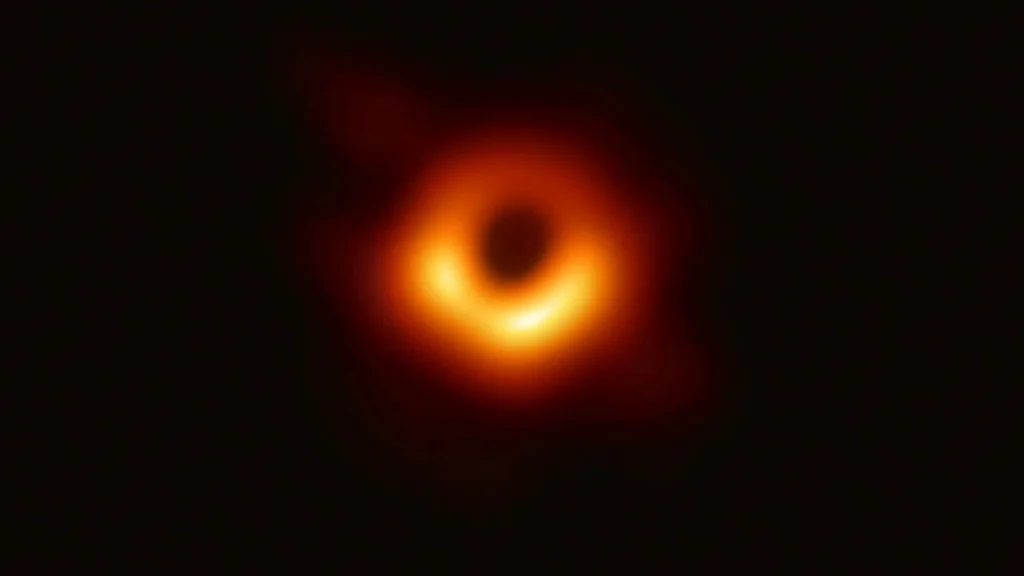
A group of physicists conducted a mathematical study to determine what happens to a quantum probe as it moves toward the center of a black hole. The results of the work were published in the scientific journal Physics Letters B. The authors used a simplified model, treating the probe as a quantum wave rather than a classical solid particle, which allowed them to describe the modified dynamics of movement under conditions of strong gravitational influence.
Reported by ScienceAlert
Scientists divided the description of the probe’s movement into two components: amplitude and phase. This allowed them to track the object’s trajectory as it approached the center of the object. However, the model showed that the probe cannot reach the singularity because time stretches to infinity.
The classical singularity is pushed beyond the physical reach of quantum probes.
— authors of the study
The current work is based on a non-rotating black hole model and uses the simplest type of probe. In the future, scientists plan to complicate the study parameters by taking into account the rotation of black holes and additional quantum properties of particles. This is necessary to verify whether the singularity remains unreachable under conditions closer to real physical objects. The researchers also suggest that the obtained data could be used to study the origin of the Universe and the nature of the Big Bang.
Translated with AI from the Ukrainian original
Read next



Most read
- russian troops attacked Ukraine with 140 drones on the night of November 29
- Configuring speed camera alerts in Android Auto
- Eastern Libya administration to demand compensation from Ukraine for strike on Benghazi port
- High Anti-Corruption Court lifts seizure of eight vehicles in Tetyana Krupa case
- Anthropic denies intentional sabotage of Claude chatbot performance